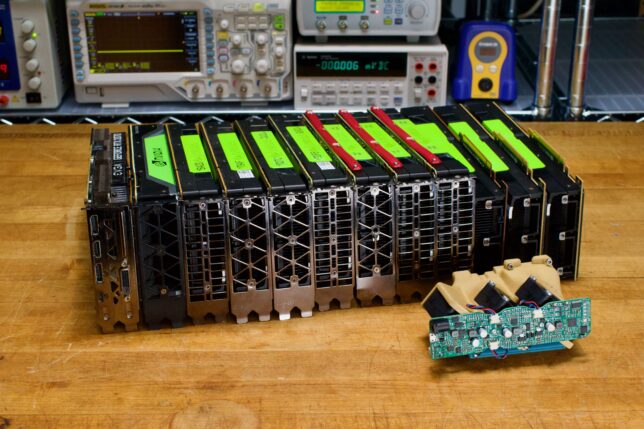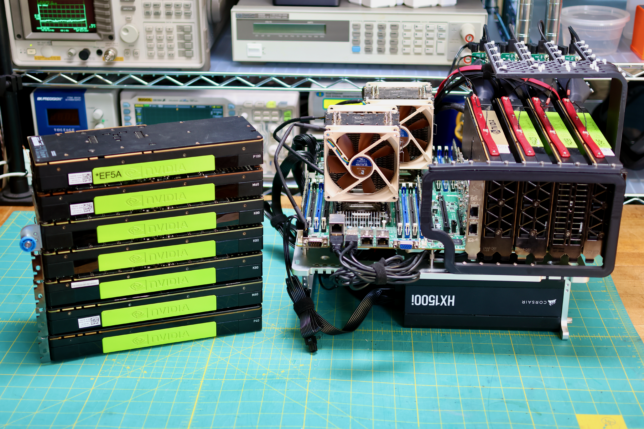
The critical finding last time was that: in this world of decommissioned enterprise hardware, three and four GPU setups are counter-intuitively durable against diminishing returns. Within a homelab GPU appliance, you can just keep adding GPUs to proportionally scale performance. Given the low cost of older ~16GB GPUs, this puts LLMs larger than the ~10B parameter single GPU models within reach for a local daily driver.
To better understand how multiple GPUs handle diverse workloads, I’ve expanded our benchmarking tool with over 130 new tests tailored for LLMs. Following requests from commenters, I also integrated power consumption monitoring to compare efficiency across different builds. Detailed results and analysis to follow.
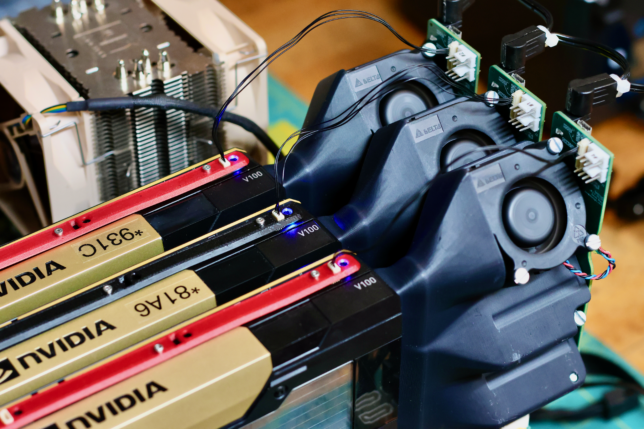
To reiterate: these cards are cheap because they run hot and ship without cooling, a non-starter for the typical secondary market customer. The project underwriting all this research has been my standalone active cooler, which is almost ready for release. If you’re interested in helping push it over the line by stress testing a sample, I’ll be recruiting beta testers using the mailing list.